Malaysia’s Renewable Energy Market: A Strategic Gateway to Asia Pacific’s Energy Transition
 Amidst Asia Pacific's accelerated energy transition, Malaysia is emerging as a critical growth engine for corporate renewable energy (RE). The market is supported by robust government policies that are continuously optimized through direct market consultation. This commitment provides strong assurance that corporations investing in Malaysia's sustainability mission can realize long-term financial, reputational, and environmental returns. However, this very dynamism necessitates careful navigation: corporate actors must be adept at engaging with a continuously evolving policy landscape, managing new schemes and regulatory complexities.
From Regulation to Reform: Malaysia’s Market Evolution
Historically, Peninsular Malaysia’s electricity market has been highly regulated. However, recent reforms are paving the way for a more competitive wholesale market. The introduction of a system marginal price mechanism signals a shift toward deregulation, creating new pathways for private sector participation and innovation.
Current Energy Landscape: Still Fossil-Fuel Heavy
Malaysia’s generation grid mix remains dominated by fossil fuels:
- Coal: 49%
- Natural Gas: 33%
- Hydro: 15%
- Solar: 2%
- Other: 1%
Despite this, the government has set ambitious targets under its 13th Malaysia Plan (MP13): 35% renewable energy share by 2030 and net-zero emissions by 2050.
Policy Drivers: Incentives for Solar and Small-Scale Renewables
Malaysia’s RE roadmap is supported by several key programs:
- Large Scale Solar (LSS): Government-led competitive bidding program to build utility scale solar farms with battery energy storage systems (BESS).
- Feed-in Tariff (FiT): Still available for small-scale projects (<1 MW), though phased out for larger installations.
These initiatives are driving greater investment into the renewable energy industry in Malaysia, laying the foundation for a stronger ecosystem in the nation.
Corporate Procurement: Unlocking Green Energy Access
Malaysia is also enabling corporate buyers to directly access renewable energy:
- Solar Accelerated Transition Action Programme (ATAP): Malaysia's new rooftop solar initiative that will be launched on 1st December 2025.
- Self-Consumption (SELCO): Government scheme targeted at corporates looking to install larger rooftop, ground-mounded or floating onsite solar PV.
- Green Electricity Tariff (GET): Allows consumers to purchase Malaysian Renewable Energy Certificates (mRECs) under the I-REC registry.
- Direct Power Purchase Agreements (DPPAs): Through the Corporate Renewable Energy Supply Scheme (CRESS), medium voltage users and above can procure RE directly from developers via the national grid.
CRESS stands out as a long-term solution offering additionality, cost predictability, and traceable sustainability claims—key factors for corporates with aggressive decarbonization goals.
Challenges to Watch
While the opportunities are promising, several hurdles remain:
- Relatively High System Access Charge (SAC) Rates: All corporates under CRESS must pay SAC on top of RE price to access the grid and deliver electricity to their premises. While SAC rates have dropped by up to 20%, they remain costly compared to other countries.
- SAC Volatility: Although rates for RE grid access are fixed for three years under the IBR framework, future revisions could affect financial planning.
- Fluid Regulatory Environment: Malaysia’s evolving policy landscape and wide range of RE procurement options can make it difficult to make long-term commitments.
- Nascent Market Ecosystem: Grid readiness, execution risks, and policy continuity are still maturing.
Nevertheless, there are key government policies and concessions providing a tailwind for CRESS:
- Revised System Access Charges (SAC): Reduced by up to 20% for firm output, improving potential DPPA economics.
- RE Fund Exemption: Further concessions in monthly electricity utility bills.
- Carbon Tax Implementation: Renewed commitment to roll out the tax in 2026 under the nation’s latest government budget.
- Emerging Success Stories: Various corporates have successfully executed offsite PPAs under the CRESS scheme since its implementation in September 2024.
Why Malaysia Matters in Your APAC RE Strategy
Malaysia’s evolving energy market offers a unique blend of policy support, corporate procurement mechanisms, and regional relevance—especially as Singapore-based buyers drive demand for regional EACs. With LNG imports rising and carbon tax discussions underway, Malaysia is positioning itself as a key node in the Asia Pacific’s energy transition. Given the strong momentum for RE, early movers are strategically positioned to capture long-term value while these favorable market conditions are in place.
Want the full picture on renewables in Asia Pacific?
.
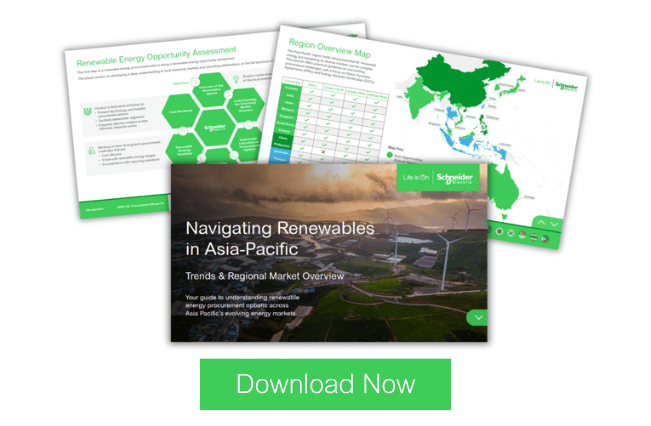
Start with our latest report, Navigating Renewables in Asia-Pacific, which offers a clear, strategic overview of the region’s dynamic energy landscape - available for download now.